Guide
Best Website Builder for Travel Creators: How to Choose
The best website builder for travel creators turns your videos into bookable pages you own. Here is how to judge the options.
By Roomer Editorial · · 6 min read
The short answer
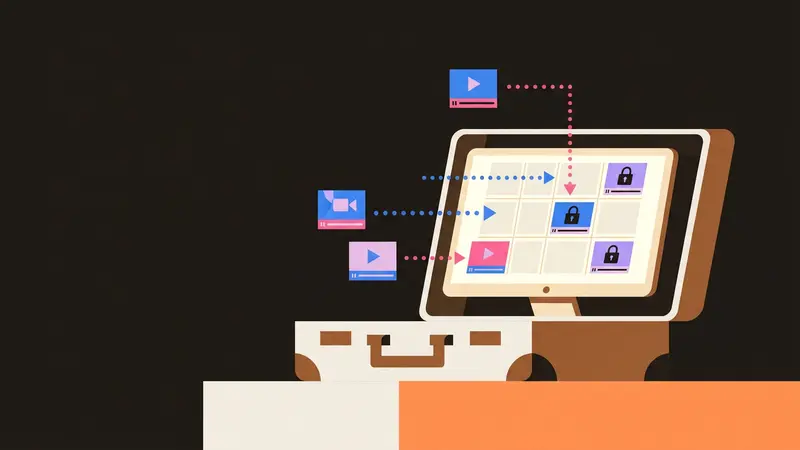
The best website builder for travel creators is one that turns your existing videos into search-friendly pages, makes those pages bookable, and keeps the commission on a site you control. General-purpose builders and blog platforms can do this, but only after you add a lot of manual work. A travel-specific platform built around video and booking usually gets you there faster with less upkeep.
The short answer
Most website builders are designed for a generic small business: a homepage, an about page, a contact form. Travel creators need something else. You have a large back catalog of videos, an audience that already trusts your recommendations, and a revenue model that depends on bookings.
So the question is not which builder has the prettiest templates. It is which one closes the gap between "someone watched my video" and "someone booked the hotel I recommended" with the least ongoing effort from you.
If you want the wider case for owning a site at all, start with what to build for a travel influencer website and why it matters. This guide assumes you have already decided to build one and want to pick the right tool.
What a travel creator's site actually has to do
Before comparing builders, get clear on the job. A travel creator's site has four responsibilities.
1. Turn video into pages people can find
Your videos live on platforms you don't control. Social feeds are built for the next scroll, not for a search six months from now. A site takes that same content and gives it a permanent, indexable home. Someone searching for a specific neighborhood, hotel, or day trip should be able to land on your page.
The practical test: how much work does it take to go from a published video to a live page? If the answer involves writing everything from scratch, you will fall behind within a month.
2. Make recommendations bookable
A page that describes a hotel but can't book it is a brochure. The builder needs a clean way to put real inventory next to your recommendation, so a reader can check dates and book without leaving to go searching.
3. Keep the revenue on your side
This is the ownership point. When a booking happens on your own site, the relationship and the commission should be yours. Some setups add layers between you and the booking. Each layer is a place where control, data, or revenue can leak. For the full picture of revenue streams, see how travel creators make money.
4. Stay out of your way
You are a creator, not a web developer. Every hour spent fixing plugins, updating themes, or reformatting links is an hour not spent filming. The right builder should demand very little maintenance once it's running.
The four types of website builders
Almost every option falls into one of four categories. Each has a real use case. Each has trade-offs for travel creators specifically.
General-purpose site builders
These are drag-and-drop tools aimed at everyone from restaurants to consultants.
Where they work: Fast to launch, good-looking templates, little technical skill required. Fine for a portfolio or a media kit page for brands.
Where they struggle: They know nothing about travel or bookings. You'll embed videos by hand, write every page yourself, and paste booking links one at a time. Scaling past a few dozen pages gets tedious. Keeping links current across hundreds of pages is harder still.
Blog-first content management systems
These are built for publishing written articles at volume, often with a large ecosystem of add-ons.
Where they work: Maximum flexibility. Strong for creators who genuinely like writing long-form and want full control over every setting.
Where they struggle: Flexibility has a cost. You manage hosting, updates, security, and a stack of add-ons that may conflict. Booking functionality usually means bolting on third-party tools. Travel creators who are video-first often find they're running a publishing operation they didn't sign up for.
Link-in-bio pages
A single page with a list of links, usually attached to a social profile.
Where they work: Very quick. Useful as a signpost from a profile to your other destinations.
Where they struggle: It isn't really a website. There's little for search engines to index, no room for depth on a destination, and the booking experience is a list of outbound links. It is a doorway, not a property you own.
Travel-creator platforms built from video
A newer category: tools designed specifically for travel creators, where your videos become the raw material for destination and hotel pages, and booking inventory is built in.
Where they work: They match the actual workflow. Video goes in, pages come out, booking sits on the page. Less manual assembly, less maintenance.
Where they struggle: Less freedom to customize every pixel than a blog CMS. If you want a heavily bespoke design or a site that's mostly unrelated to travel, a specialist platform may feel narrow.
A checklist for comparing builders
Use these questions when you evaluate any option. Answer them honestly for the version of your business that exists a year from now, not just launch day.
- Video to page: Can I turn existing videos into pages without rewriting everything by hand?
- Direct upload: Can I upload video directly, or am I dependent on embedding from another platform?
- Booking inventory: Is real hotel and activity inventory available on the page, or am I pasting links manually?
- Commission ownership: When a booking happens on my site, who keeps the commission?
- Search visibility: Are pages structured so search engines can find and index them?
- Scale: Will adding the hundredth page be as easy as adding the tenth?
- Maintenance: How many things can break, and who fixes them?
- Portability of effort: If I stop posting for a month, does the site keep working for me?
If a builder scores well on design but poorly on the first four, it's a good tool for someone else's business.
Common mistakes travel creators make
Choosing for looks. Templates are the easiest thing to compare and the least important. A beautiful site with no booking path earns nothing.
Overbuilding on day one. Creators often pick the most flexible tool because they might need it later. Then they spend weeks configuring instead of publishing. Start with what gets pages live.
Treating the site as a side project. A site that gets updated twice a year won't rank or convert. Pick a tool that makes publishing a habit rather than a chore.
Ignoring who owns the booking. Sending everyone to a third-party page is easy. It also means someone else holds the customer relationship. Keep the booking on your own site wherever you can.
Waiting until the audience is "big enough." Search traffic compounds over time. The pages you publish early are the ones that have had the longest to get found. If you're still building your channel, how to become a travel creator covers sequencing.
How to choose based on where you are
If you're video-first and want bookings: A travel-creator platform built from video is usually the best fit. It matches how you already work.
If you love writing and want total control: A blog-first CMS gives you that, provided you accept the maintenance.
If you just need a media kit for brand deals: A general-purpose builder is fine. It won't do much for bookings.
If you only need a signpost from your profile: A link-in-bio page works, but treat it as a pointer to a real site, not a replacement for one.
The underlying principle across all of these: your audience is the asset. The site is where you get to own the relationship with it. For more on that framing, read what travel creators do, how they earn, and what to own.
How this works on Roomer Pro
Roomer is built for the video-first travel creator described above. More than 11,000 creators use it, and roughly 1M Roomer pages are indexed on Google.
Here is what Roomer Pro does:
- Your own travel site, built from your videos. Your existing content becomes the foundation of your site, so you're not starting from a blank page.
- Direct video upload. Upload your videos straight to your site rather than relying only on embeds from other platforms.
- Bookable pages. Your recommendations sit on pages readers can actually book from.
- Booking rails via Vio, Stay22, GetYourGuide, Viator and Klook. Hotel and activity inventory from these providers appears on your pages, so readers can check and book what you recommend.
- 100% of commissions on your own site. When a booking happens on your site, the commission is yours.
You bring the audience and the videos. Roomer Pro handles turning them into a bookable site you own.
Frequently asked questions
What is the best website builder for travel creators?
The best option is one that turns your videos into indexable pages, makes those pages bookable, and lets you keep commissions on your own site. For video-first creators, a travel-specific platform usually beats a general-purpose builder because it removes most of the manual work.
Do travel creators really need a website if they have a big social following?
Yes, if you want independence. Social platforms control your reach and your audience relationship, while a site gives your content a permanent, searchable home and a place where bookings happen on your terms.
Is a link-in-bio page enough for a travel creator?
It works as a signpost from your profile, but it isn't a real website. There's little for search engines to index and no room to make recommendations bookable in depth.
Should I use a blog platform or a travel-specific builder?
Choose a blog platform if you enjoy long-form writing and are comfortable managing hosting, updates, and add-ons. Choose a travel-specific builder if you're video-first and want booking built in with less maintenance.
What features matter most when comparing website builders?
Prioritize turning video into pages, direct video upload, built-in booking inventory, and ownership of commissions on your own site. Design matters, but it ranks below whether the site can actually convert a reader into a booking.
When should a travel creator start building a website?
Earlier than most do. Search visibility builds over time, so pages published early have the longest runway to be found, even before your audience feels large.